Self-Selected Portions in Free-Living Conditions
How individuals choose portion sizes when deciding independently
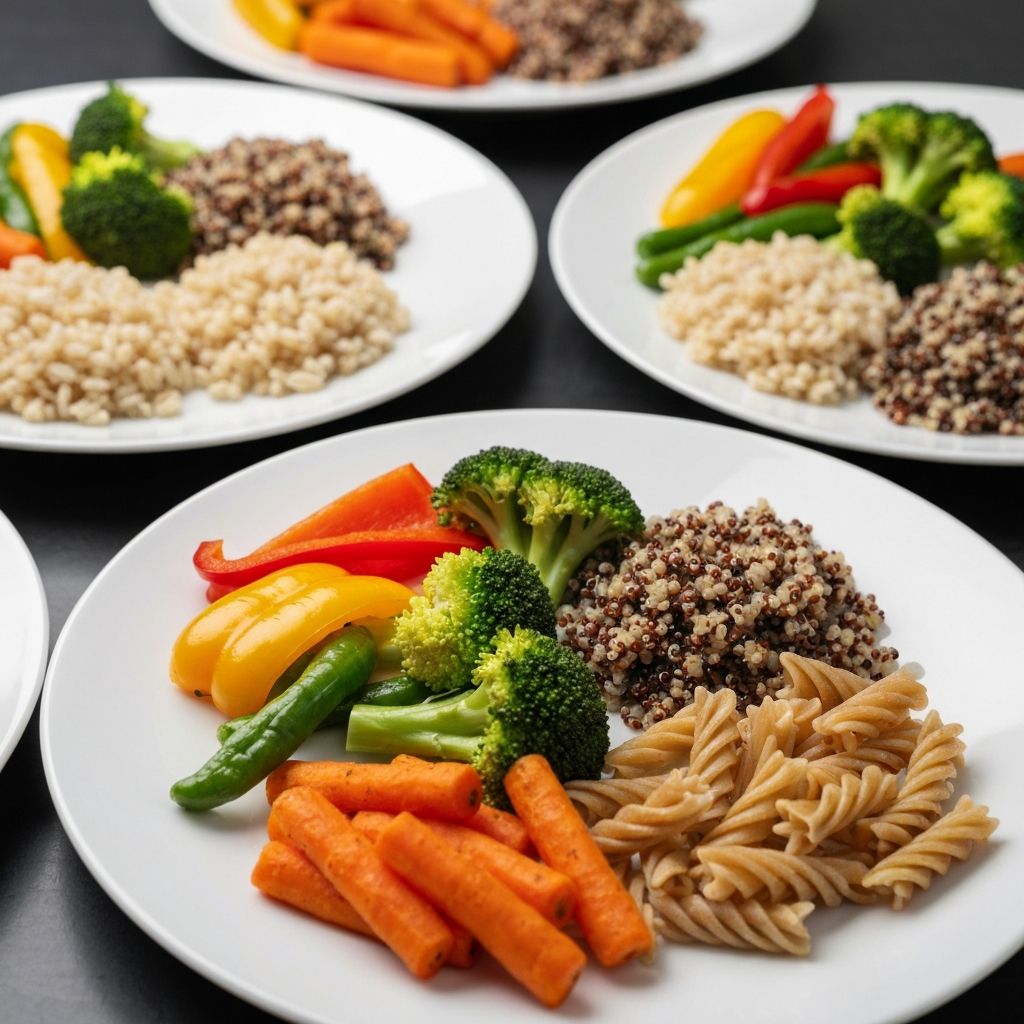
Understanding Self-Selected Portions
Self-selected portions refer to food quantities that individuals choose when making independent decisions about how much to consume. Unlike prescribed or predetermined portions, self-selected portions reflect individuals' own judgments about appropriateness and satisfaction.
Research studying self-selected portions in naturalistic settings reveals substantial variation both between individuals and within the same individual across different eating occasions. This variation reflects the complex decision-making processes people employ when determining portion sizes.
Factors Influencing Self-Selected Portion Choices
Multiple factors influence the portions individuals select when given autonomy over quantity decisions. Contextual factors including food availability, eating setting, social environment, and meal occasion all contribute to portion selection. Individual factors such as hunger, energy needs, food preferences, and eating habits shape how much individuals choose to consume.
Additionally, learned expectations about appropriate portion sizes, influenced by prior food experiences and cultural norms, influence self-selected portions. Individuals develop habitual portion sizes for frequently consumed foods, reflecting the integration of multiple influences into stable consumption patterns.
Variation in Self-Selected Portions
Research documenting self-selected portion sizes across diverse samples reveals substantial heterogeneity. The same food may be selected in widely different quantities by different individuals in identical eating contexts, suggesting that personal factors strongly influence portion selection.
Additionally, individuals show within-subject variation, selecting different portions of the same food across different occasions. This variation may reflect changes in hunger, satiety state, contextual factors, or other temporary influences on portion selection. Understanding this variation illustrates that portion selection reflects dynamic decision-making rather than fixed choices.
Self-Selected Portions in Buffet Environments
Buffet-style food service environments, where individuals serve themselves from available food options, provide naturalistic contexts for studying self-selected portions. Observational studies of buffet consumption reveal wide variation in quantities individuals choose and substantial differences in total consumption across individuals.
Factors including food visibility, accessibility, social presence, and psychological state influence buffet consumption choices. The opportunity to serve oneself in buffet contexts removes certain constraints present in other eating environments, allowing observation of portion selection under conditions of high autonomy.
Self-Selected Portions and Physiological Feedback
Research examining whether self-selected portions align with physiological energy needs reveals a complex relationship. While individuals appear to have some capacity to adjust portions based on internal signals, this capacity is imperfect and can be overridden by external environmental influences.
Over time, individuals demonstrate considerable appetite regulation through portion selection, such that individuals consuming lower-energy-density foods may select larger portions to achieve similar energy intake. However, short-term portion selection does not always result in precise energy matching, and individuals often fail to fully compensate for variations in food energy content.
Learning and Habituation in Portion Selection
Repeated consumption experiences influence the portions individuals subsequently select. Individuals who regularly consume certain portion sizes develop expectations and habits around those quantities, which subsequently guide their self-selected portions.
This learning and habituation process means that portions available in an individual's food environment over time can reshape what individuals subsequently consider appropriate and desirable portion sizes. Exposure to larger portions in commercial food environments may increase the portions individuals subsequently select when given autonomy.
Individual Differences in Self-Selected Portions
Substantial individual differences exist in the average portions individuals select. Some individuals consistently select smaller portions while others select larger portions of the same foods. These individual differences reflect combinations of physiological factors (such as energy needs and hunger sensitivity), psychological factors (such as eating attitudes and body image concerns), and learned patterns (such as family food traditions and consumption habits).
Age, gender, body weight status, dietary patterns, and food preferences all demonstrate relationships with self-selected portions, though individual variation within demographic groups often exceeds variation between groups, indicating the importance of individual differences.
Self-Selected Portions and Satiation
Research investigating the relationship between self-selected portions and subsequent satiation reveals that individuals do not always select portions that produce equivalent satiation experiences. Individuals may select portions of high-energy-density foods that provide less satiation compared to equally-caloric portions of lower-energy-density alternatives.
This suggests that portion selection incorporates multiple considerations beyond achieving specific satiation levels, including food palatability, habit, environmental cues, and other preferences. The complexity of portion selection decision-making indicates that portions are determined by multiple competing influences rather than a single regulatory mechanism.
Implications for Understanding Consumption
The study of self-selected portions provides insight into how individuals approach food consumption decisions in autonomous contexts. Understanding these patterns illustrates that portion selection reflects complex interactions between internal (physiological, psychological) and external (environmental, social) influences.
This information is presented for educational understanding of portion science. Individual food choices and consumption patterns reflect complex personal circumstances, preferences, and contexts that extend far beyond portion selection alone. Individual applications of this research vary widely based on personal situations and considerations.
Back to Articles